

Amazon Fulfillment Centers Explained: Locations, Logistics, and FBA Shipping Strategy
The Amazon FBA program uses Amazon fulfillment centers (FCs) to store, pick, pack, and ship products. This allows sellers to outsource logistics and focus on sales, product development, and marketing.
How Many Fulfillment Centers Does Amazon Have?
Amazon operates a large and continuously expanding logistics network. As of recent years, there are over 100+ fulfillment centers in the United States and more than 1,000 logistics facilities globally (including fulfillment centers, sortation centers, and delivery stations).
It’s important to note that Amazon may split your shipment and assign inventory to multiple fulfillment centers to optimize delivery speed and reduce last-mile costs.
Table of Contents
Amazon Warehouse Locations Overview
Amazon’s warehouse network is built for speed and regional coverage. Instead of relying on a single warehouse, inventory is distributed across multiple locations to ensure faster delivery times and better inventory balancing.
North America:
- United States: The U.S. remains Amazon’s largest fulfillment network, with facilities spread across California, Texas, New Jersey, Illinois, and other key logistics hubs.
- Canada: Amazon operates multiple fulfillment centers supporting nationwide delivery, especially around Toronto and Vancouver.
- Mexico: The network continues to expand to support growing e-commerce demand in Latin America.
Europe:
- United Kingdom: One of the largest fulfillment networks in Europe with strong last-mile coverage.
- Germany: A key logistics hub for central Europe distribution.
- France: Strategic locations support cross-border EU fulfillment.
Asia-Pacific:
- Japan: Highly developed fulfillment network with strong domestic logistics efficiency.
- India: Rapidly growing infrastructure supporting local sellers and Prime delivery.
- Australia: Smaller but expanding network focused on major cities.
China & Cross-Border Fulfillment:
- Amazon China: Amazon has reduced its domestic marketplace operations in China, but continues to operate logistics, Kindle, and cross-border e-commerce services.
- FBA China (Export Model): Most Chinese sellers use FBA by shipping goods from China to overseas fulfillment centers (USA, EU, etc.) rather than storing inventory inside mainland China.
- Common China Export Hubs: Shenzhen, Guangzhou, Yiwu, Ningbo, and Shanghai are key consolidation and export cities for Amazon FBA shipments.
- Cross-border warehouses: Many sellers use third-party warehouses (3PL) in China for inspection, labeling, and consolidation before shipping to Amazon fulfillment centers.
Unlike the U.S. or Europe, Amazon does not operate a standard FBA warehouse network inside mainland China for domestic fulfillment. Instead, China plays a critical role as a manufacturing and export hub for global Amazon sellers.
How Amazon Assigns Your Ship-To Warehouse?
When creating a shipment in Amazon Seller Central, you do not manually choose the fulfillment center. Amazon automatically assigns the destination warehouse based on inventory demand, customer location, and network optimization.
- Default (Distributed Inventory): Your shipment may be split into multiple warehouses across different states.
- Inventory Placement Service (IPS): You can ship to one location, and Amazon redistributes inventory internally (additional fees apply).
- Minimal Split (when eligible): Some shipments may be sent to fewer locations depending on product type and volume.
Amazon Warehouse Codes Explained
Each Amazon fulfillment center uses a unique code such as ONT8, LAX9, JFK8. These codes are usually based on nearby airport codes plus a number.
Example:
ONT8 – Moreno Valley, California
LAX9 – Fontana, California
JFK8 – Staten Island, New York
Understanding these codes helps when tracking shipments, communicating with freight forwarders, or planning logistics routes.
Shipping from China to Amazon FBA (Practical Guide)
For most sellers sourcing from China, shipping to Amazon FBA involves several steps beyond just sending cartons. Proper planning can reduce cost, avoid delays, and prevent check-in issues at Amazon warehouses.
Typical workflow:
- Supplier production (1688 / factory)
- Send goods to China warehouse (inspection + consolidation)
- Labeling (FNSKU / carton labels)
- Palletizing (if required)
- International shipping (air / sea / express)
- Customs clearance
- Final delivery to Amazon FC
Shipping methods:
- Air shipping: 7–15 days, higher cost, suitable for small and urgent shipments
- Sea shipping: 20–35 days, lower cost, ideal for bulk orders
- Express (DHL / UPS / FedEx): fast but expensive, often used for samples
Important notes:
- Always wait for Amazon to generate the final warehouse address before shipping
- Carton labels must match the shipment plan exactly
- Incorrect labeling can lead to delays or rejection
- Consider using a prep center or 3PL for better control
Using a China Prep Center Before FBA
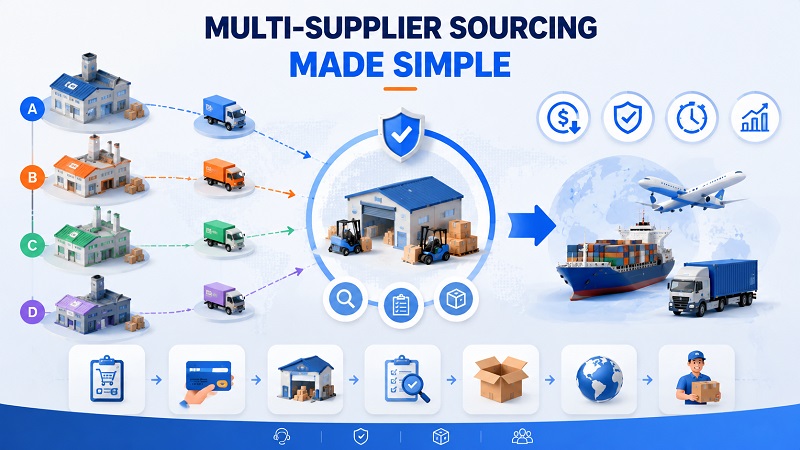
Many sellers choose to use a China-based prep center before shipping to Amazon. This is especially useful when sourcing from multiple suppliers.
- Combine multiple products into one shipment
- Quality inspection before export
- Custom packaging and labeling
- Reduce Amazon rejection risks
This step is often overlooked by new sellers, but it can significantly reduce long-term costs and operational issues.
Common FBA Shipping Mistakes (And How to Avoid Them)
Many Amazon sellers run into avoidable problems when shipping to FBA, especially when sourcing from China. Below are some of the most common issues and how to handle them properly.
Incorrect labeling: Missing or wrong FNSKU labels can cause inventory to be rejected or delayed at the fulfillment center.
Shipping before final address confirmation: Always wait for Amazon to assign the exact warehouse before dispatching goods.
Mixed cartons: Mixing multiple SKUs incorrectly inside cartons can lead to check-in errors and inventory discrepancies.
No quality inspection: Skipping inspection may result in defective products reaching Amazon, causing returns and negative reviews.
Improper packaging: Weak cartons or incorrect pallet standards may lead to damage during transit or refusal by Amazon.
FBA Shipping Cost Breakdown (From China)
Understanding the cost structure helps you better control margins and avoid unexpected expenses when shipping to Amazon fulfillment centers.
- Product cost: Manufacturing or sourcing cost from supplier
- Domestic shipping (China): Factory → warehouse transport
- Inspection & prep: Quality check, labeling, repacking
- International shipping: Air / sea freight cost
- Customs & duties: Import tax depending on product category
- Last-mile delivery: Delivery to Amazon warehouse
- Amazon fees: Storage, fulfillment, referral fees
For most sellers, shipping and logistics costs typically account for 20%–40% of the total landed cost, depending on product size and shipping method.
When Should You Use a 3PL or Sourcing Agent?
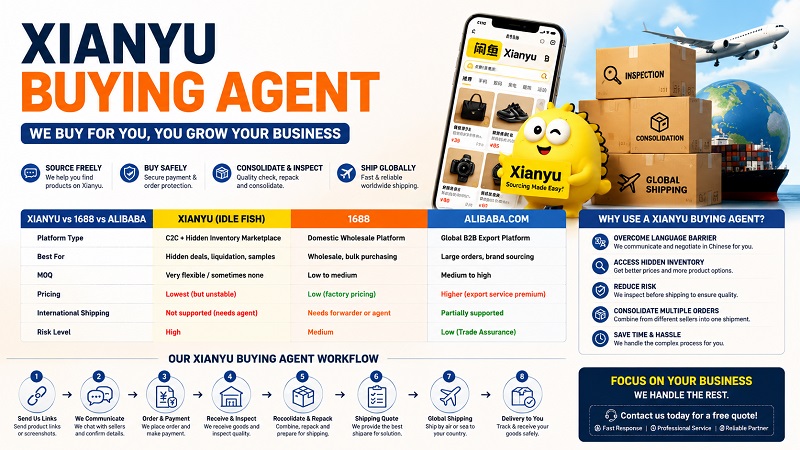
If you are dealing with multiple suppliers or customized products, managing everything directly can quickly become inefficient. This is where a sourcing agent or 3PL warehouse becomes useful.
- Multiple suppliers → need consolidation
- Custom packaging or branding required
- Need inspection before shipping
- Want to reduce communication complexity
In these cases, using a reliable partner can streamline operations and reduce long-term risks.
Need Help Shipping to Amazon FBA?
If you are sourcing products from China and need help with inspection, labeling, consolidation, or shipping to Amazon fulfillment centers, working with an experienced team can save both time and cost.
- Product sourcing from 1688 / Alibaba
- Quality inspection and reporting
- FNSKU labeling and packaging
- Multi-supplier consolidation
- Shipping directly to Amazon FBA
This approach is especially useful for private label sellers, wholesale buyers, and e-commerce businesses scaling their operations.
Shipping from China to Amazon FBA?
If you’re sourcing products from China and need help with shipping to Amazon fulfillment centers, Supplyia can support you at every step — from purchasing and inspection to labeling and final delivery.
- ✔ Product sourcing from 1688 & suppliers
- ✔ Quality inspection (full inspection available)
- ✔ FNSKU labeling & packaging
- ✔ Multi-supplier consolidation
- ✔ Direct shipping to Amazon warehouses


Hi there, I check your blogs like every week.
Your writing style is awesome, keep doing what you’re doing!
Thank you so much.
Positive site, where did u come up with the information on this posting? I’m pleased I discovered it though, ill be checking back soon to find out what additional posts you include.